
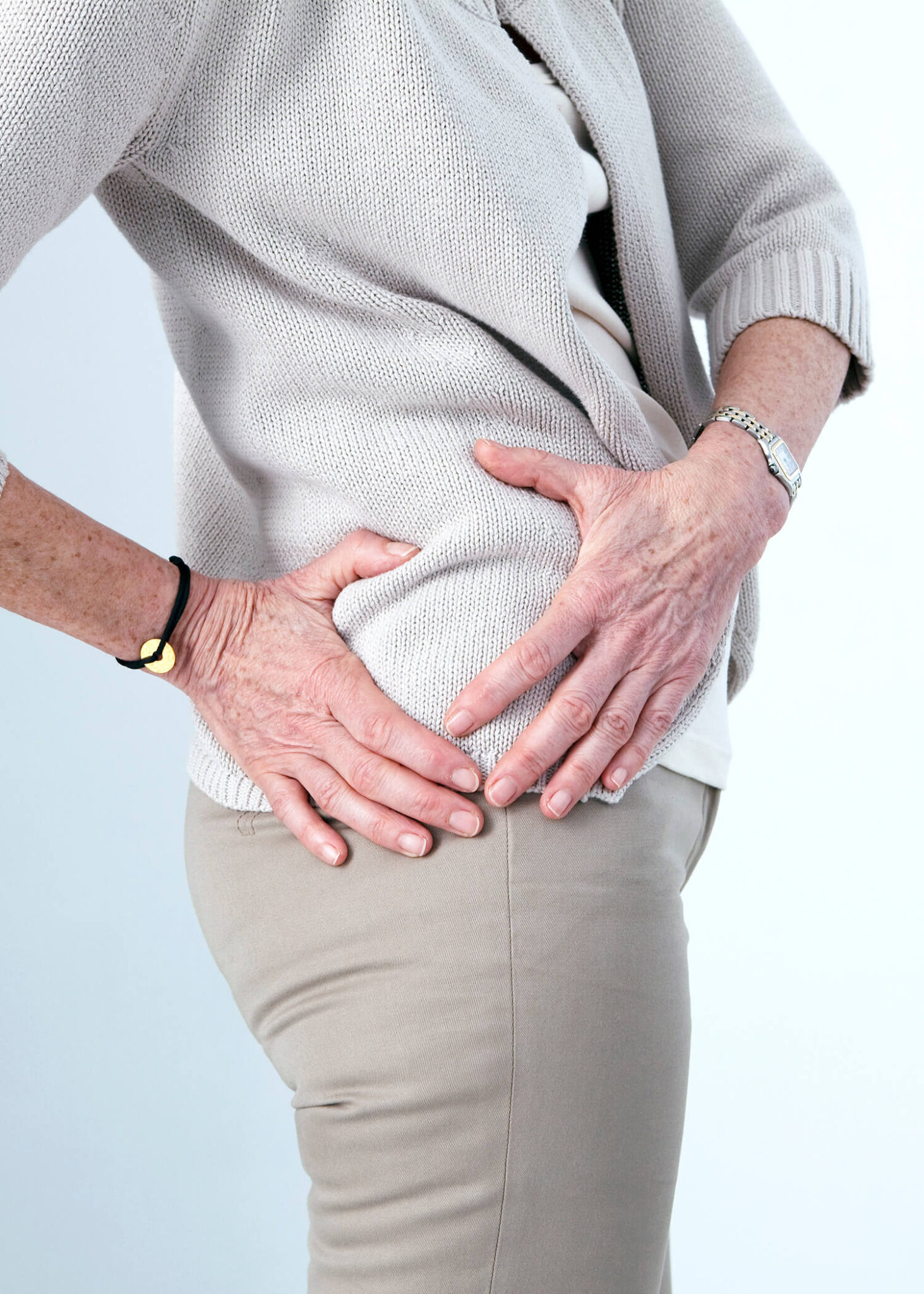
Treating Chronic Hip Pain
Total hip replacement surgery is a major operation carrying the inherent risks associated with anesthesia, surgery, and hospital-based infections.
AROmotion preserves your natural joint while effectively treating patients with common conditions such as Bone-on-Bone Osteoarthritis, Bone Spurs, and Labral Tears. Our approach enables patients to avoid scarring and a surgical recovery period.
Our treatment combines three nontraumatic medical modalities to achieve rapid and lasting pain relief, surpassing the outcomes of knee replacements.
Cut out the pain not the Joint
Understanding Hip Pain
Pain is not just a symptom, Pain is the root cause of osteoarthritis
You have knee pain and swelling because the hard type 2 articular cartilage that coats the ends of your bones has developed shallow spots or cavities, which deepen over time. As a result, the sensory nerves underneath become less protected and experience more pain when pressure is applied to those areas. The medical term for these cavities is chondromalacia (ICD code M94.26), which is also used to bill for a total knee replacement operation.
Pain Does Not Mean the Hip is Mechanically Compromised
If you didn't have joint pain, would you be seeking medical care? The reality is that most people seek medical care due to joint pain, not because of major mechanical issues with their joints. Apart from stiffness caused by swelling, their joints mechanically function just fine.
The majority of patients who choose to undergo knee replacements actually still have joints that mechanically function. For those with severely compromised joints, it is readily apparent, and these individuals typically require assistive devices like walkers or wheelchairs.
Bone Spurs and Labrum Pathology Are Not the Reasons for Your Hip Replacement
While bone spurs and labrum tears often appear in X-rays, they are usually associated findings rather than direct causes of pain. Research indicates that these conditions are common as we age, even in people without pain. In some cases, bone spurs can actually have a stabilizing effect on the joint.
Hip Replacement Surgery is the Only Tool in the Orthopedic Surgeon's Toolbox
Whether you're dealing with mild arthritic pain from chondromalacia or a severely compromised joint, orthopedic surgeons rely on just one tool—replacement surgery. It's like going to the dentist for a simple cavity, but because they don't know how to do fillings or root canals, they grind down your tooth and put a crown in its place.
The AROmotion Treatment: The Only Proven, Long-Lasting, Non-Traumatic Solution for Osteoarthritis Pain
Our single-visit treatment combines three noninvasive and nontraumatic medical modalities to achieve rapid and lasting pain relief. Developed by a collaborative team of physicians, surgeons, and university scientists, its efficacy has been confirmed through the analysis of WOMAC data from our patients, spanning over 7 years of clinical treatment. The procedure is performed in-office without the need for general anesthesia or incisions. Patients can conveniently walk in and out on the same day, leaving with only a few band-aids and an ice pack.
Learn More
Webinar
Discover advancements in joint care and pain relief—watch our webinar to learn how AROmotion is revolutionizing the treatment of Osteoarthritis.
Learn More
Hip Conditions Treated
Our board-certified medical doctors can review your medical case and images to determine if you might be a candidate for our minimally invasive treatments.
Hip Osteoarthritis
Hip osteoarthritis is a condition that wears down the hyaline cartilage on the ends of joint bones, creating cavities in the protective shell around nerve endings. This deterioration, medically known as chondromalacia, is similar to experiencing a toothache.
Bone-on-bone Hip pain
You may have heard the phrase 'bone-on-bone' to describe your situation. The hip is a ball-and-socket joint. Over time, the hyaline cartilage on the head of the femur (thighbone) and the socket of the pelvis can wear thin, forming cavities and exposing sensitive nerves.
Bone spurs in Hip
Over time, bone spurs develop to protect and stabilize the sides of the joint. Most people with bone spurs often do not experience symptoms. However, for some, bone spurs may reduce the joint’s range of motion, even if it remains functional.
Labrum Tear in the Hip
Most people over the age of 60 have some degree of labrum tearing, and although Labrum are often found in X-rays of patients, they are typically an associated finding rather than the direct cause of pain.
8,000+
Joints Treated
9 Years
of Experience
6 Locations
Across Florida, Georgia, and Arizona
Patient Success Story
“My name is Frank and this is my story. My right knee cartilage was gone. I was bone-to-bone. The pain was unbearable. I went to doctors and they wanted to do surgery they wanted to cut out my knee. I didn’t want to go that way. ARO changed my life. I had the procedure done and now I’m riding, no pain. It’s like I started a new chapter in my life. It’s a miracle, it really is that I’m back cycling. It’s like my dream come true.”
Frank
Talk with our Doctors
Find out if you are a candidate
AROmotion has helped thousands of patients achieve rapid and lasting pain relief, including those who were told they were 'bone-on-bone' and that their only orthopedic option was total joint replacement.